Daily Habits Tracker: A Designer's Review of Freebies & Graphics
I recently received a request from a client launching a boutique wellness line focused on mindfulness and daily routines. They needed more than just a logo; they wanted a cohesive visual system that extended into digital downloads, packaging inserts, and social media campaigns. As a designer who lives in the intersection of branding and print-on-demand assets, I immediately scanned our freebies library for a Daily Habits Tracker that could serve as the anchor for this project. The search led me to an editable digital download described simply as easy to understand and ready to print. But does it hold up under the scrutiny of a real commercial project? Here is my professional breakdown of how this graphic design asset performs in actual client work.
The First Impression: Mood and Visual Identity
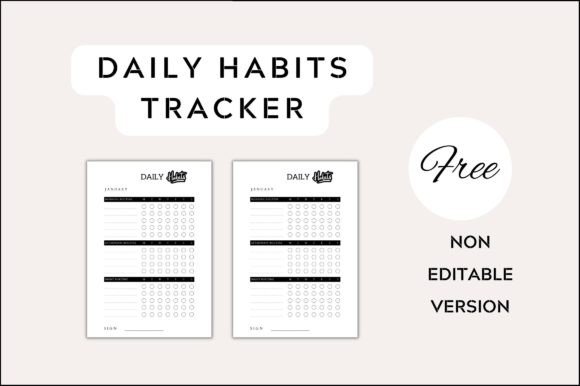
When you first open a Daily Habits Tracker, the immediate feeling is one of calm organization. In a market flooded with chaotic, neon-colored productivity tools, this asset stands out by offering a clean, approachable aesthetic. It feels like a piece of modern design that respects the user's mental space. For a small business owner or a handmade brand looking to establish trust, this visual tone is crucial. It suggests professionalism without being sterile.
The layout demonstrates a strong understanding of visual hierarchy. The tracking sections are clearly defined, guiding the eye naturally from top to bottom. This is not just a clipart image; it is a functional illustration that supports a brand identity centered on growth and consistency. When placed alongside other marketing visuals, such as Instagram posts or Pinterest pins, it creates a unified mood board that feels curated rather than assembled. It fits perfectly into a lifestyle brand, a local event planner's materials, or a digital seller's shop front.
Real-World Application Across Design Categories
The versatility of this Digital Download is where it truly shines. I tested the asset across several common design scenarios to see how it would translate from screen to physical product.
- Packaging and Product Labels: Imagine this tracker printed on high-quality cardstock and tucked inside a box of artisanal candles or bath salts. It elevates the unboxing experience, turning a simple purchase into a ritual. The design works beautifully as a decorative accent on the back of a product label, reinforcing the brand's message of self-care.
- Social Media Graphics: For content creators and bloggers, this asset is a goldmine. It serves as an excellent background for Canva templates or standalone graphics for Instagram stories. The clean lines ensure that overlay text remains legible, making it perfect for promotional campaigns or educational carousels about habit formation.
- Cricut Projects and Sticker Design: If you are a crafter or a print-on-demand seller, the vector-like clarity of this file makes it ideal for sublimation designs. Whether cutting vinyl for water bottles or printing stickers for planners, the Daily Habits Tracker holds its shape well at various scales.
- Editorial and Web Design: Beyond physical products, this asset integrates seamlessly into web design layouts. It can act as a hero graphic for a landing page or a supporting element in an editorial blog post about personal development.
Strategic Placement: Where It Thrives
In a complex design bundle, knowing where to place your assets is half the battle. The Daily Habits Tracker excels in large layout areas where it can breathe. It is particularly effective as a hero graphic on a website homepage or as a central focal point in a flyer for a workshop or seminar. When used in product mockups, it adds a layer of realism that helps potential buyers visualize the end result.
It also functions wonderfully as a themed collection element. If you are building a seasonal campaign around New Year's resolutions or a "January Reset," this tracker provides the necessary visual weight to tie the concept together. It acts as a supporting brand element that reinforces the emotional appeal of your project, encouraging audience engagement through relatable utility.
Cautionary Notes: Where to Use Carefully
However, no asset is universally perfect. There are specific contexts where a Daily Habits Tracker might require adjustment or should be avoided entirely. If you are working on minimalist branding for a luxury corporate firm, this playful, functional style might clash with the required strict visual hierarchy. Similarly, in crowded layouts with dense text, the tracker can become visually noisy if not balanced correctly.
Be cautious when using this asset on low-contrast backgrounds. If the design relies on subtle gradients or dark themes, the internal details of the tracker may get lost, compromising readability. Additionally, for very small sizes, such as tiny app icons or micro-stickers, the intricate elements might blur. In these cases, consider simplifying the asset or using it only as a background texture rather than the primary focus.
Professional Designer Checklist for Commercial Use
Before integrating any design asset into a paid client project, a rigorous quality check is non-negotiable. Here is the workflow I recommend before finalizing the Daily Habits Tracker for production:
- Test in Black and White: Convert the file to grayscale to ensure the contrast holds up without color assistance. This reveals hidden issues with legibility that RGB colors often mask.
- Check File Formats and Editability: Verify if the asset includes SVG or vector formats for infinite scalability. Inspect PNG transparency carefully to ensure there are no white halos around the edges, which look unprofessional in layered designs.
- Compare Typography Styles: Assess how the tracker interacts with your chosen font family. Does it pair better with a serif font for a traditional feel, or a sans-serif font for a modern look? Ensure the handwritten or display fonts within the tracker do not compete with your main body copy.
- Preview at Scale: Place the asset on real mockups, from a massive billboard down to a business card. Check print quality to ensure lines remain crisp and do not break up during the printing process.
- Confirm Licensing: Always review the commercial license. Just because a Freebie is available does not automatically grant rights for resale or use in a client's final deliverables. Ensure you have the right to use it for commercial design purposes.
Final Verdict on Usability
The Daily Habits Tracker proves itself as a valuable tool in the arsenal of a creative designer. It bridges the gap between utility and aesthetics, offering a polished look that enhances brand consistency. While it requires thoughtful placement and technical verification, its ability to improve the overall impression of a design project is undeniable. For handmade businesses, digital sellers, and marketers looking to add value to their offerings, this editable template is a smart investment of time. It transforms a standard printable into a branded experience that resonates with users on an emotional level.
Ultimately, the decision to use this asset comes down to your specific design direction. If your goal is to create a warm, inviting, and organized atmosphere, this tracker delivers exactly that. It is a testament to how a well-designed digital product can elevate a brand from a simple idea to a tangible, trusted reality.